Legal Invoice Template
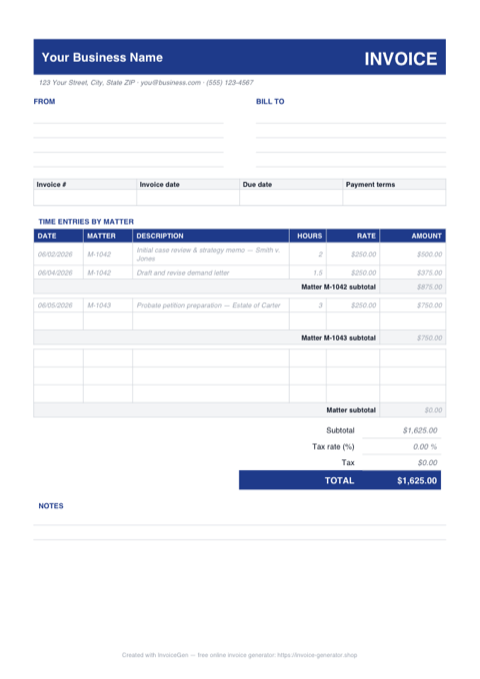
Legal billing demands precision — every tenth of an hour matters, trust account rules are non-negotiable, and clients scrutinize every line. This template helps lawyers and law firms generate detailed, professional invoices that meet bar association standards.
Why Use This Template
Billable Hours in Tenths
Record time entries in six-minute increments with date, timekeeper, and detailed task descriptions. The template structures entries so nothing falls through the cracks.
Trust Account Transparency
Show trust balance, amount drawn for the current invoice, and remaining balance. Clear trust accounting satisfies bar requirements and keeps clients fully informed.
Fee and Cost Separation
Distinguish attorney fees from hard costs (filing fees, court reporters) and soft costs (copies, postage). This level of detail is expected in legal billing and reduces client pushback.
What to Include in Your Legal Invoice Template
- Matter name and case or file number
- Timekeeper name, title, and billing rate
- Detailed time entries (date, hours, description)
- Attorney fees subtotal
- Hard costs (filing fees, court reporters, experts)
- Soft costs (copies, postage, research databases)
- Trust account balance and amount applied
- Retainer replenishment threshold
This Template Is Perfect For
- Solo practitioners and small law firms
- Corporate and business law attorneys
- Litigation and trial lawyers
- Legal consultants and contract attorneys
Create Your Legal Invoice Template Now
Get Started — FreeFrequently Asked Questions
How should lawyers track billable hours on invoices?
What are the trust account rules for legal invoices?
How do I bill for a legal retainer?
Should legal invoices separate fees from expenses?
Related Templates & Tools
Lawyers & Law Firms Invoice Generator
Free invoice generator for lawyers and law firms. Track billable hours, separate trust transactions, handle retainers, and generate compliant legal invoices.
Medical Invoice Template
Free medical invoice template for clinics, therapists, and private practices. Document procedures, insurance details, and patient balances with PDF invoices.
Catering Invoice Template
Free catering invoice template for event caterers. Detail menus, guest counts, staffing, rentals, and deposits with professional PDF invoices.
Free Invoice Generator
Create professional invoices, receipts, quotes, and more. No sign-up required.